When Client Input Becomes Creative Quicksand: Reclaiming Direction Without Losing the Relationship
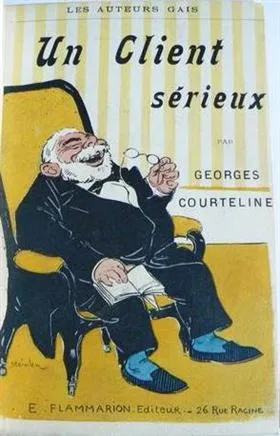
Photo: Théophile Steinlen, Public domain, via Wikimedia Commons
There is a particular kind of meeting that every creative professional recognizes. The work is strong. The concept is coherent. And then, one by one, well-intentioned voices begin to speak — each comment reasonable on its own, each suggestion offered in good faith. By the time the room empties, the clarity that defined the project has been replaced by a tangle of competing preferences, and the work that made sense an hour ago no longer quite does.
This is not a failure of the client. It is, more often, a failure of process.
The trap is easy to fall into precisely because it mimics virtue. Listening to stakeholders feels collaborative. Incorporating feedback signals responsiveness. Adapting to new input appears flexible. But there is a meaningful difference between a creative practice that evolves through genuine dialogue and one that erodes through accumulated accommodation. Learning to distinguish between the two is, arguably, one of the most important professional skills a design partnership can develop.
The Psychology of Feedback Accumulation
When clients offer feedback, they are rarely trying to undermine the work. Most are attempting to close the gap between what they imagined and what they are seeing — a gap that is, in many cases, the result of imprecise briefing rather than imprecise execution. The problem is that this gap-closing instinct tends to operate at the level of surface detail rather than structural intent.
A stakeholder who says can we make this feel warmer is not necessarily asking for a color change. They may be responding to something they cannot yet articulate — a tonal misalignment, a pacing issue, a conceptual frame that does not quite match their audience. When a creative team responds by adjusting the literal thing named rather than investigating the underlying concern, the result is a series of modifications that address symptoms while leaving the root problem untouched.
Over time, these surface adjustments accumulate. The work becomes a record of every concern that was raised, every preference that was honored, every compromise that was struck. It no longer belongs to a coherent vision. It belongs to a process.
Distinguishing Sharpening Feedback from Diluting Feedback
Not all input operates the same way. Some feedback genuinely improves the work — it surfaces a blind spot, catches an inconsistency, or introduces a consideration the creative team had not adequately weighted. Other feedback, despite being sincerely offered, pulls the work in directions that serve individual preferences rather than the project's central purpose.
A useful diagnostic question is this: does this input clarify what the work is trying to do, or does it expand the number of things the work is trying to do?
Sharpening feedback tends to be specific and directional. It identifies a gap between the stated intent and the executed result. It points toward something rather than away from something. Diluting feedback, by contrast, tends to be additive. It asks the work to accommodate an additional concern, satisfy an additional audience, or hedge against an additional risk. Individually, each request may seem modest. Collectively, they reshape the work into something that serves everyone partially and no one completely.
At Ostwald & Helgason, we have found that naming this distinction explicitly — within the creative partnership itself, and sometimes in direct conversation with clients — is more effective than trying to manage it silently. When a team can articulate why a particular piece of feedback, however reasonable, risks compromising the work's coherence, that articulation becomes the basis for a productive conversation rather than a quiet internal debate.
The Architecture of a Useful Feedback Session
Much of the confusion around client input stems not from bad intentions but from unstructured processes. When feedback is solicited without a clear framework, stakeholders default to their own interpretive lenses — personal aesthetic preferences, institutional risk aversion, competitive anxiety, or simply the last thing they read. The creative team receives a collage of responses that are difficult to synthesize and nearly impossible to prioritize.
One approach that has proven effective is separating feedback into distinct registers before the conversation begins. Ask stakeholders to respond to three specific questions: Is the work solving the right problem? Is it solving it in a way that feels true to the project's values? Are there factual or logistical inaccuracies that need correction? These questions channel input toward the levels where client expertise is most valuable — strategic alignment, brand fidelity, accuracy — and away from the aesthetic and craft decisions where the creative team's judgment should hold primary weight.
This is not a method for dismissing client voices. It is a method for honoring them more precisely.
When to Push Back, and How
The decision to push back on client feedback is not simply a matter of creative confidence. It requires a clear understanding of what the work is for, genuine respect for the client's concerns, and the ability to make an argument that is grounded in the project's stated objectives rather than personal preference.
The most effective pushback is preemptive. Before a project enters a feedback phase, establishing shared criteria for evaluation — what does success look like for this work, and by whose measure — gives the creative team a reference point that belongs to both parties. When a piece of feedback conflicts with those criteria, the conversation can return to the shared standard rather than devolving into a contest of opinions.
When pushback must happen in the moment, the framing matters considerably. This conflicts with the goal we agreed on in the brief lands differently than we disagree with that direction. The first locates the tension in the work's relationship to its purpose. The second locates it between people. Only one of those framings tends to move a conversation forward.
The Cost of Not Deciding
Design paralysis is rarely the result of too much conflict. It is more often the result of too little resolution. When feedback accumulates without a clear process for evaluating and integrating it, the creative team enters a state of suspended revision — perpetually incorporating, never concluding, unable to commit to a direction because no one has been willing to make the call.
The antidote is not speed. It is decisiveness. And decisiveness, in a collaborative creative practice, requires both parties to accept that serving the work sometimes means not serving every preference. Clients who understand this tend to receive better work. Creative teams who can articulate it tend to build more durable relationships.
The feedback loop, managed well, is one of the most powerful instruments available to a creative partnership. Managed poorly, it is the mechanism by which good work quietly disappears.