The Slow Erosion: How Creative Partnerships Fail Before Anyone Admits It

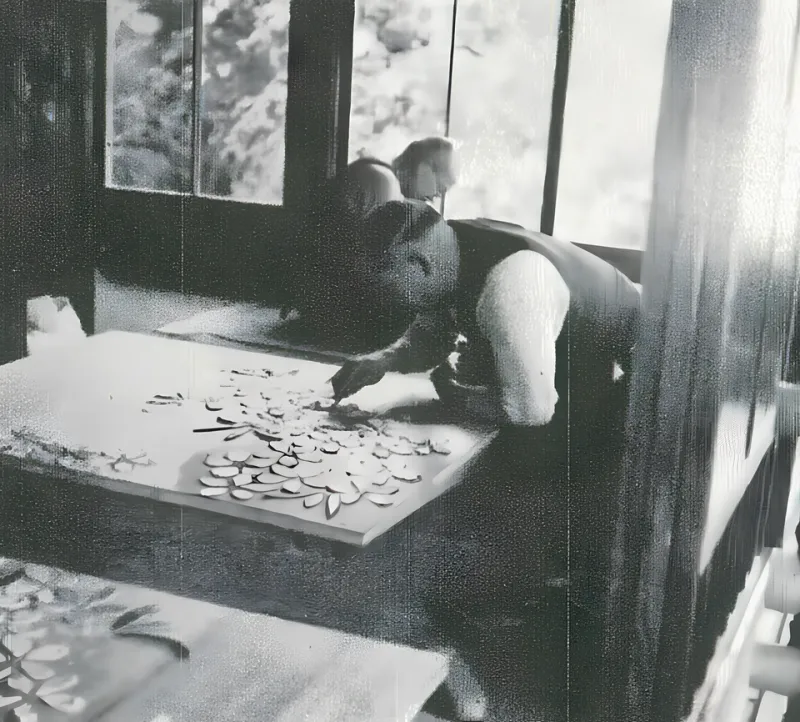
Photo: Rico Shen, CC BY-SA 4.0, via Wikimedia Commons
The Myth of the Clean Break
When a creative partnership ends, the story told afterward is usually a clean one. Irreconcilable differences. Diverging visions. A single precipitating event that made the dissolution feel inevitable. These narratives are tidy, and they are almost always incomplete.
The more common reality is that the partnership had been failing for months—perhaps years—before anyone named it. Not through dramatic conflict, but through a slow accumulation of process failures: decisions made without consultation, contributions quietly resented but never raised, assumptions about workflow that turned out to be entirely different between the two parties involved.
We call this collaboration debt. Like financial debt, it compounds. Unlike financial debt, it rarely appears on any ledger until the balance becomes unpayable.
What Collaboration Debt Looks Like in Practice
Collaboration debt is not a single failure. It is a pattern of small omissions that, in isolation, seem unremarkable. A partner makes a client-facing decision without looping in the other. A disagreement about direction is resolved through silence rather than conversation. One collaborator begins doing more of a particular kind of work not because the division was agreed upon, but because the other simply stopped engaging with it.
None of these moments feel catastrophic as they occur. Each one can be rationalized—there was a deadline, the decision seemed obvious, the conversation could wait. But over time, these omissions construct a parallel reality in which the partnership appears to be functioning while the actual experience of it has become something quite different.
The dangerous quality of collaboration debt is that it accrues invisibly. Unlike a billing dispute or a client conflict, it leaves no documentation. By the time it surfaces—usually in the form of an argument that seems disproportionate to its immediate cause—the underlying balance has already become difficult to reconcile.
The Role of Unexamined Assumptions
At the center of most collaboration debt is a set of assumptions that were never made explicit. These assumptions typically cluster around three areas: workflow, decision-making authority, and the valuation of different kinds of contribution.
Workflow assumptions are perhaps the most common. Two collaborators may have entirely different mental models of how a project moves from initiation to delivery—different ideas about when feedback should be exchanged, how revisions are managed, who holds client relationships at which stages. When these models are never articulated, each collaborator operates according to their own internal logic, and friction accumulates not because either party is wrong, but because neither party knows the other is working from a different map.
Decision-making assumptions are more consequential. In most creative partnerships, there is an implicit understanding—rarely examined—about which decisions require mutual input and which can be made unilaterally. That understanding may function well in the early stages of a collaboration, when both parties are highly engaged and communication is frequent. As the partnership matures, the implicit boundaries tend to drift. One partner may begin making decisions that the other believed required consultation. Neither names it. The resentment, however, is noted.
Contribution assumptions may be the most corrosive. Creative partnerships rarely divide labor in perfect symmetry. One partner may carry more client-facing responsibility; the other may carry more of the conceptual or craft burden. These imbalances can be entirely workable—provided both parties have agreed to them explicitly and revisited that agreement periodically. When the division of contribution is simply allowed to evolve without discussion, the partner carrying more of a particular burden will eventually begin to feel that their work is undervalued, while the other may be entirely unaware that an imbalance exists.
Conducting a Process Audit
The antidote to collaboration debt is not a difficult conversation. It is a regular one. Specifically, what we recommend is a practice we refer to as a process audit: a structured, periodic review of how the partnership is actually functioning, distinct from any review of the work itself.
A process audit is not a performance review and it is not a grievance session. It is a diagnostic exercise. Its purpose is to surface assumptions before they calcify, to identify workflow drift before it becomes a pattern, and to ensure that both partners' experience of the collaboration remains legible to each other.
The audit should address, at minimum, four questions. First: Are we both operating from the same understanding of how decisions get made? Second: Is the current distribution of work—of any kind—one that both parties have consciously agreed to, or has it simply evolved? Third: Are there areas of the process where one partner feels less informed than they would like? Fourth: Is there anything either partner has been deferring to raise?
That last question is, in many ways, the most important. Deferred conversations are the raw material of collaboration debt. They are almost never deferred because the subject is genuinely unimportant; they are deferred because the subject feels uncomfortable, or because the timing never seems right, or because the partner doing the deferring hopes the issue will resolve itself.
It rarely does.
On the Discipline of Transparency
Process transparency is not a natural disposition for most creative professionals. The culture of creative work tends to valorize intuition, spontaneity, and a certain productive informality. Explicit process conversation can feel bureaucratic, even distrustful—as though formalizing the terms of a collaboration implies a lack of faith in the relationship itself.
This is a false choice. Transparency about process is not a substitute for trust; it is one of the primary mechanisms through which trust is maintained. A partnership in which both parties feel genuinely informed about how work is being made and decisions are being reached is one in which the work itself can take on greater ambition, greater risk, and greater depth.
At Ostwald & Helgason, the commitment to process transparency is not incidental to the work we produce. It is, in a meaningful sense, constitutive of it. The collaboration that produces something neither partner could have made alone is the collaboration in which both partners remain genuinely present to each other—not just to the outcome, but to the making.
Collaboration debt, left unaddressed, forecloses that possibility. The process audit, practiced consistently, keeps it open.